
|
||||||
|
||||||
|
||||||
|
||||||
|
||||||
|
||||||
|
||||||
|
||||||





Scam operation
How the scam operates:
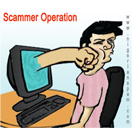
The operation of the Nigerianspam(scam) is highly unpredictable and often misleading. But usually, the operation would centre on the usual statements and involve the same intricacies.
Nigerian scammer operations:
The operation is professionally organized in Nigeria, with offices, working fax numbers, and often contacts at government offices. The investor who attempts to research the background of the offer will usually find that all pieces fit perfectly together. If they then agree to the deal, the scammer will send several documents bearing official government stamps; seals etc., and then introduce delays, such as "in order to transmit the money, we need to bribe a bank official. Could you help us with a loan?" or "In order for you to be allowed to be a party to the transaction, you need to have holdings at a Nigerian bank of $100,000 or more"
Examples:
At first, the investors are contacted, typically with an offer like "A rich person from the needy country needs to discreetly move money abroad, would it be possible to use your account?" The sums involved are usually in the millions of dollars, and the investor is promised a large percentage as reward.
The proposed deal is often presented as a harmless in order to put off participants from contacting the authorities at a later point of time.
Invitation letters from various countries:
Sometimes psychological pressure is added by claiming all the possible justifications. Sometimes, victims are invited to Nigeria and are asked to meet real or fake government officials. Some victims that travel are instead held for ransom. In some cases they are smuggled into the country without a visa and then threatened into giving up more money, as the penalties for being in Nigeria without a visa are especially severe. In the most extreme cases the victim is even murdered after he hands over the money or any other transactions. In any case, the promised money transfer never happens. What they actually claim does not exist.
Scam operates-list of countries:
- Nigeria
- South Africa
- West African states
- Netherlands (Amsterdam)
- United Kingdom (London)
- Spain (Madrid)
- Canada (Toronto)
Nigerian scammer-Barrister:
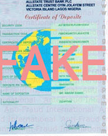
A variant of the 419 scam will appear to be sent by a barrister, representing the estate of some long-lost relative you never knew you had (your last name will be inserted into the email message) who perished along with his family in a car or airplane accident last April; the scammer will claim to have gone to a lot of trouble to find you in order to give you a share of the millions of dollars available if you'll just forward your bank account information to him.
Another variant pretends to be a "winning notification" from a lottery company, typically in the UK or the Netherlands, requesting payment in advance to collect the sum that the victim has "won"
Ebay scam:

The scammers offers to buy some expensive item (which the victim advertised on eBay).
For example:
- Official
- Certified bank
- Cashier's check
Fake charity and fake church scams:

In this type of scam the victim is asked to donate or invest in a local charity or church. While no direct monetary benefit is presented to the victim, these scams are perpetrated by the same scammers that also employ more traditional advance fee fraud and the scams follow roughly the same modus operandi as the previously mentioned scams.
Webmail scam:
- 419 scam is significantly less complicated in its delivery methods.
- The scam is sent via free web mail services such as Hotmail or paid services.
- The scams are normally sent from internet cafes, the addresses to be sent to and bodies of the mails copied and pasted from memory sticks into the web mail interface.
- London-based gangs use unwanted scam email (Spam ware) on laptop, which it is easy to connect to the cafe's network secretly, but even this software is notably out-of-date.
For more details: Browse all types of scammers
Nigerianspam.com is dedicated to all the hardworking people who have been scammed by the spammer or 419 scam frauds. Although our site concentrates on providing awareness of Nigerian 419 spam (scam), scam baiting, advance fee fraud, scam phising, also we deal with other types of fraud such as letter spam, e-mail scam, lottery spam as well. You can go through our scam baiting tips, it is just amazing way to deal with the spammer or scammer.
Nigerian Scam | 419 Scam | Features of Scam | Mission | Research | Mail Archives | About Us | File A Complaint | Spam News | Origin Of Scam | Operation Of Scam | Consequences | Miscellaneous Scams | Scam Sites | FAQ | Contact Us | Scam Resources Links | Nigerian Scammers | Site Map | Mail Archives SiteMap | Scam Glossary | Scam Resources Books | Scam Checker Tool | Scam baiting | More Scam Sites | Scam Awareness Quiz | Celebrity Scam | Search Engine Genie | Bharat Udyog Ratna Award Scam Alert | Jeff Adams Real Estate Seminar | Russ Whitney Real Estate